Amethyst Meaning History and Characteristics
#Gemstone GuideDiscover the history, meaning, and characteristics of amethyst, one of the world's most popular purple gemstones. Learn about its origins, appearance, symbolism, and use in jewellery.
Amethyst is one of the most recognised and popular gemstones in the world, admired for its beautiful purple colour and long history of use in jewellery and decorative objects. As a variety of quartz, amethyst is valued for its durability, distinctive appearance, and wide range of purple shades, from pale lavender to deep violet.
Today, amethyst remains a popular choice for gemstone bracelets, necklaces, rings, and other jewellery thanks to its timeless appeal and versatility.
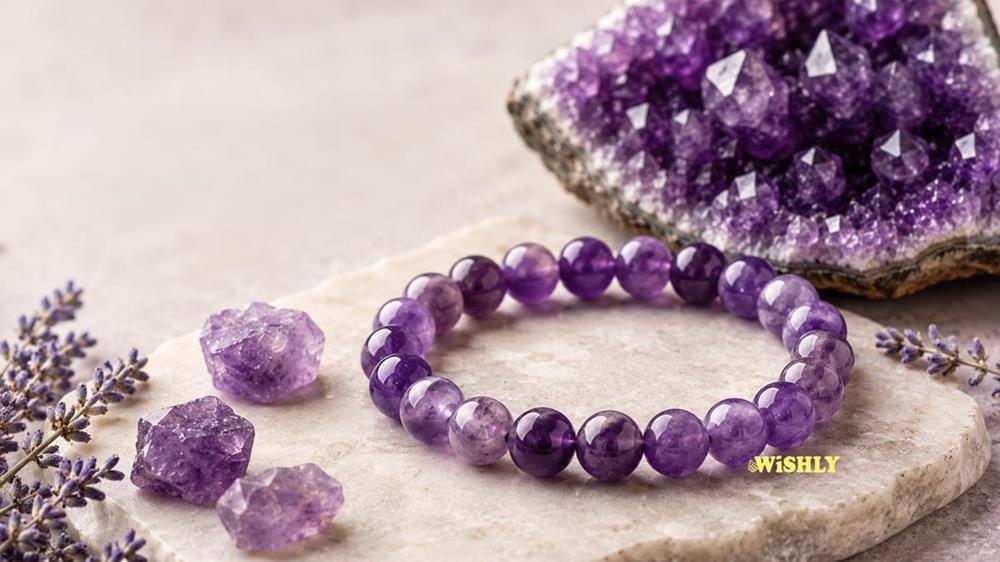
Table of Contents
1. What Is Amethyst?
2. The History of Amethyst
3. Amethyst Colour and Appearance
4. Amethyst in Jewellery
5. Traditional Symbolism of Amethyst
6. Caring for Amethyst Jewellery
7. Why Choose an Amethyst Bracelet?
8. Explore Our Amethyst Bracelets
9. Related Gemstone Guides
1. What Is Amethyst?
Amethyst is a purple variety of quartz formed naturally within the Earth over millions of years. Its colour is created by trace amounts of iron and natural irradiation during the crystal formation process. The gemstone can range in colour from light lilac and lavender to rich violet and deep purple. Some stones may display subtle variations in colour, making each piece unique. Amethyst deposits can be found in several countries around the world, including Brazil, Uruguay, Zambia, and Madagascar.2. The History of Amethyst
Amethyst has been valued for thousands of years and was highly prized by ancient civilizations. The gemstone was used by the Ancient Egyptians, Greeks, and Romans in jewellery, decorative carvings, and ceremonial objects. The name "amethyst" comes from the Greek word amethystos, meaning "not intoxicated." Ancient Greeks believed the stone could help prevent drunkenness and often incorporated it into drinking vessels and ornaments. Throughout history, amethyst has also been associated with royalty and wealth due to its rich purple colour, which was once considered a symbol of status and prestige.3. Amethyst Colour and Appearance
One of the most appealing characteristics of amethyst is its striking purple colour. Common shades include:- Light lavender
- Lilac
- Medium purple
- Deep violet
- Reddish purple
4. Amethyst in Jewellery
Amethyst is widely used in jewellery because it offers an attractive combination of beauty, durability, and affordability. Popular jewellery types include:- Gemstone bracelets
- Beaded bracelets
- Necklaces
- Earrings
- Rings
- Pendants
5. Traditional Symbolism of Amethyst
Throughout history, various cultures have associated amethyst with a range of symbolic meanings.- Wisdom
- Balance
- Clarity
- Inner peace
- Spiritual growth
6. Caring for Amethyst Jewellery
Proper care can help maintain the appearance of amethyst jewellery. Some simple care tips include:- Avoid harsh chemicals and cleaning products.
- Remove jewellery before heavy physical activity.
- Store separately from harder gemstones to reduce scratching.
- Clean gently using warm water, mild soap, and a soft cloth.