Sodalite Meaning History and Characteristics
#Gemstone GuideDiscover the history, meaning, and characteristics of Sodalite. Learn about its rich blue colour, white veining, geological origins, and use in jewellery.
Sodalite is a striking blue gemstone admired for its rich colour, distinctive white veining, and natural beauty. First identified in the early nineteenth century, it has become a popular choice for jewellery, decorative objects, and gemstone bracelets.
Known for its deep blue appearance and unique patterns, Sodalite offers an elegant alternative to many other blue gemstones. Whether chosen for its natural beauty, geological origins, or traditional symbolism, Sodalite continues to be a favourite among gemstone enthusiasts.
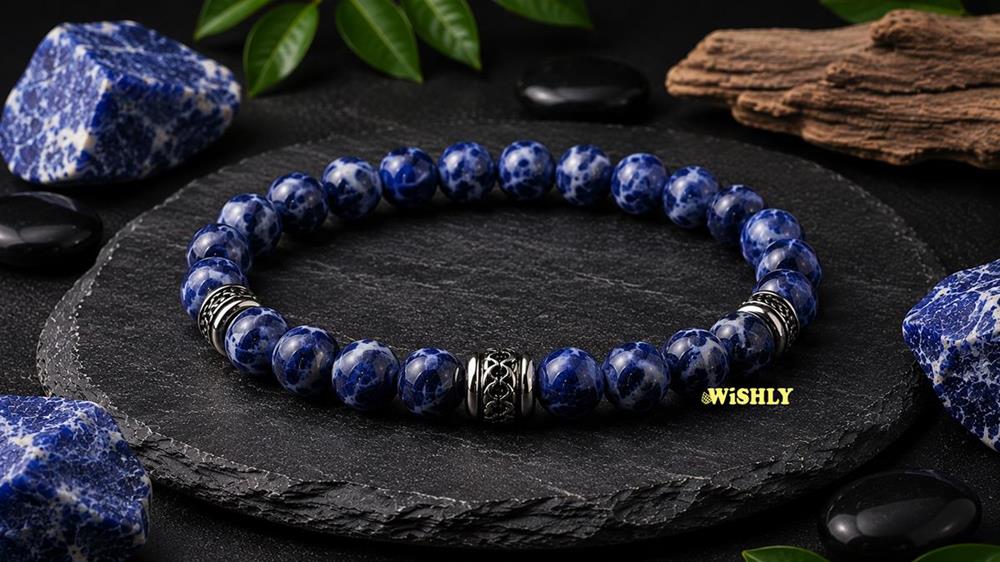
Table of Contents
1. What Is Sodalite?
2. The History of Sodalite
3. Sodalite Colour and Appearance
4. Sodalite in Jewellery
5. Traditional Symbolism of Sodalite
6. Caring for Sodalite Jewellery
7. Why Choose a Sodalite Bracelet?
8. Explore Our Sodalite Bracelets
9. Related Gemstone Guides
1. What Is Sodalite?
Sodalite is a naturally occurring mineral composed primarily of sodium, aluminium, silicon, oxygen, and chlorine. It belongs to the feldspathoid mineral group and is recognised for its vibrant blue colour, often accented by white calcite veining. Unlike many gemstones, Sodalite rarely appears completely uniform. Its distinctive mix of blue tones and white patterns makes every stone unique. Major sources of Sodalite include Brazil, Canada, Namibia, India, and Russia. Its attractive appearance and ability to take a smooth polish have made Sodalite a popular gemstone for jewellery.2. The History of Sodalite
Sodalite was first officially identified in Greenland in 1811, although decorative stones containing the mineral had been used earlier in various regions. The gemstone gained international popularity after large deposits were discovered in Canada during the late nineteenth century. Its rich blue colour quickly made it a favourite for jewellery, carvings, and ornamental objects. Today, Sodalite remains widely used in gemstone jewellery and decorative pieces around the world.3. Sodalite Colour and Appearance
The defining feature of Sodalite is its rich blue colour combined with natural white veining. Common characteristics include:- Royal blue to deep blue colour
- White calcite veining
- Smooth polished surface
- Opaque appearance
- Unique natural patterns
4. Sodalite in Jewellery
Sodalite is widely used in jewellery because of its distinctive colour and polished appearance. Popular jewellery types include:- Gemstone bracelets
- Beaded bracelets
- Necklaces
- Earrings
- Rings
- Pendants
5. Traditional Symbolism of Sodalite
Throughout history, many people have associated Sodalite with various symbolic meanings. Traditionally, Sodalite has been linked with:- Wisdom
- Communication
- Clarity
- Balance
- Confidence
6. Caring for Sodalite Jewellery
Proper care can help preserve the appearance of Sodalite jewellery. Some simple care tips include:- Avoid harsh chemicals and abrasive cleaners.
- Remove jewellery before strenuous physical activities.
- Store separately from harder gemstones when possible.
- Clean gently using warm water, mild soap, and a soft cloth.