Obsidian Meaning History and Characteristics
#Gemstone GuideDiscover the history, meaning, and characteristics of Obsidian. Learn about its volcanic origins, glass-like appearance, traditional symbolism, and use in jewellery.
Obsidian is a naturally occurring volcanic glass formed when molten lava cools rapidly with minimal crystal growth. Known for its deep black appearance and smooth, glass-like surface, Obsidian has been valued for thousands of years in tools, decorative objects, and jewellery.
Today, Obsidian remains a popular choice for gemstone bracelets, necklaces, and other accessories due to its striking appearance and unique volcanic origins. Whether appreciated for its natural beauty, geological history, or traditional symbolism, Obsidian continues to be one of the most distinctive stones used in jewellery.
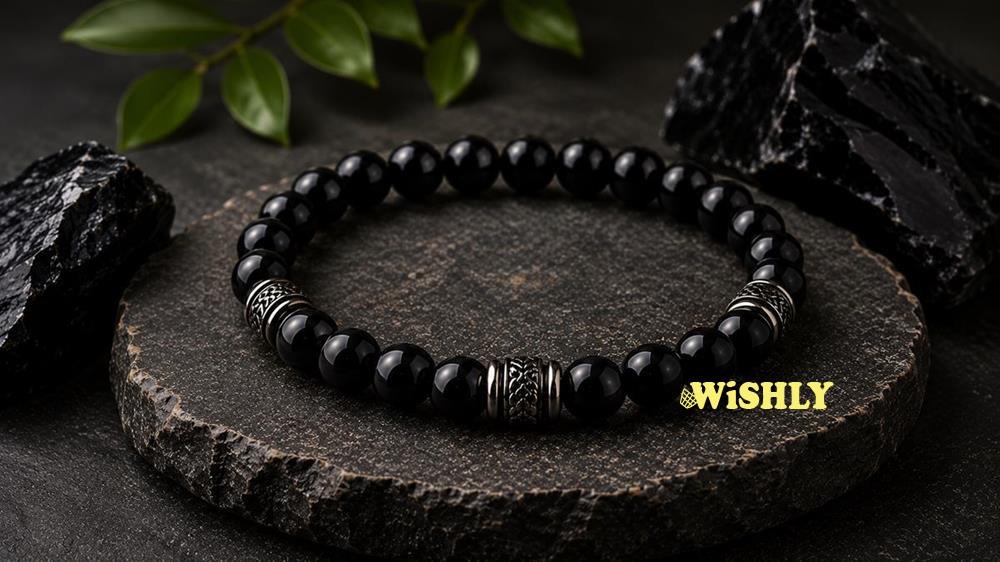
Table of Contents
1. What Is Obsidian?
2. The History of Obsidian
3. Obsidian Colour and Appearance
4. Obsidian in Jewellery
5. Traditional Symbolism of Obsidian
6. Caring for Obsidian Jewellery
7. Why Choose an Obsidian Bracelet?
8. Explore Our Obsidian Bracelets
9. Related Gemstone Guides
1. What Is Obsidian?
Obsidian is a naturally occurring volcanic glass created when lava cools extremely quickly after a volcanic eruption. Because the lava solidifies rapidly, crystals do not have enough time to form, resulting in a smooth, glass-like material rather than a crystalline stone. Most Obsidian is black, although it can also occur in shades of brown, grey, green, and even varieties displaying subtle iridescent effects. Major deposits of Obsidian can be found in regions with a history of volcanic activity, including the United States, Mexico, Iceland, Japan, and parts of Central and South America.2. The History of Obsidian
Obsidian has one of the longest histories of human use among natural materials. Ancient civilizations used Obsidian to create tools, arrowheads, blades, and ceremonial objects because its sharp edges could be shaped with remarkable precision. Archaeological discoveries show that Obsidian was traded across large distances by ancient cultures, demonstrating its value and importance throughout history. As metalworking became more common, Obsidian gradually shifted from a practical material to one used primarily for decorative, artistic, and jewellery purposes.3. Obsidian Colour and Appearance
The most common variety of Obsidian is deep black with a smooth, reflective surface. Common characteristics include:- Deep black colour
- Glass-like appearance
- Smooth polished surface
- Natural shine
- Occasional subtle patterns or inclusions
4. Obsidian in Jewellery
Obsidian is widely used in jewellery because of its striking appearance and ability to polish to a high shine. Popular jewellery types include:- Gemstone bracelets
- Beaded bracelets
- Necklaces
- Pendants
- Earrings
- Rings
5. Traditional Symbolism of Obsidian
Throughout history, various cultures have associated Obsidian with a range of symbolic meanings. Traditionally, Obsidian has been linked with:- Protection
- Strength
- Clarity
- Grounding
- Self-reflection
6. Caring for Obsidian Jewellery
Proper care can help maintain the appearance of Obsidian jewellery. Some simple care tips include:- Avoid dropping or striking the stone against hard surfaces.
- Remove jewellery before heavy physical activity.
- Store separately to help prevent scratches.
- Clean gently using warm water, mild soap, and a soft cloth.