Lapis Lazuli Meaning History and Characteristics
#Gemstone GuideDiscover the history, meaning, and characteristics of Lapis Lazuli. Learn about its royal blue colour, golden pyrite flecks, historical significance, and use in jewellery.
Lapis Lazuli is a striking natural gemstone admired for its rich royal blue colour and distinctive golden flecks. Prized for thousands of years, it has been used in jewellery, carvings, decorative objects, and works of art by many ancient civilizations.
Known for its vibrant appearance and remarkable history, Lapis Lazuli remains one of the most recognisable blue gemstones used in jewellery today. Whether appreciated for its natural beauty, geological origins, or traditional symbolism, Lapis Lazuli continues to be a timeless gemstone.
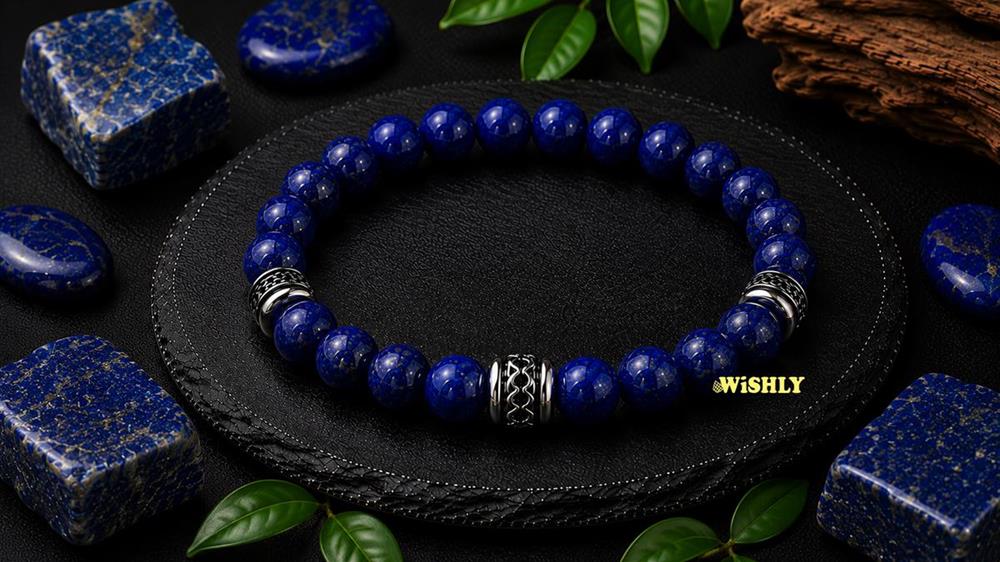
Table of Contents
1. What Is Lapis Lazuli?
2. The History of Lapis Lazuli
3. Lapis Lazuli Colour and Appearance
4. Lapis Lazuli in Jewellery
5. Traditional Symbolism of Lapis Lazuli
6. Caring for Lapis Lazuli Jewellery
7. Why Choose a Lapis Lazuli Bracelet?
8. Explore Our Lapis Lazuli Bracelets
9. Related Gemstone Guides
1. What Is Lapis Lazuli?
Lapis Lazuli is a metamorphic rock composed primarily of the mineral lazurite, along with varying amounts of calcite, pyrite, and other minerals. Its characteristic deep blue colour comes from lazurite, while tiny golden flecks are usually caused by naturally occurring pyrite. White streaks or patches may also be present due to calcite, making every piece unique. Major sources of Lapis Lazuli include Afghanistan, Chile, Russia, Pakistan, and Myanmar. Its rich colour and ability to take a beautiful polish have made Lapis Lazuli a popular material for jewellery throughout history.2. The History of Lapis Lazuli
Lapis Lazuli has one of the longest recorded histories of any ornamental stone. For more than six thousand years, it has been prized by ancient civilizations including the Egyptians, Mesopotamians, Greeks, and Romans. It was used in jewellery, ceremonial objects, seals, and decorative carvings. The gemstone was also ground into a fine powder to produce ultramarine, one of the most valuable blue pigments used by Renaissance artists. Today, Lapis Lazuli continues to be admired for its historical significance and timeless beauty.3. Lapis Lazuli Colour and Appearance
The defining feature of Lapis Lazuli is its deep royal blue colour. Common characteristics include:- Royal blue to deep blue colour
- Natural golden pyrite flecks
- White calcite streaks or patches
- Smooth polished finish
- Opaque appearance
4. Lapis Lazuli in Jewellery
Lapis Lazuli is widely used in jewellery because of its striking colour and elegant appearance. Popular jewellery types include:- Gemstone bracelets
- Beaded bracelets
- Necklaces
- Pendants
- Earrings
- Rings
5. Traditional Symbolism of Lapis Lazuli
Throughout history, many cultures have associated Lapis Lazuli with various symbolic meanings. Traditionally, Lapis Lazuli has been linked with:- Wisdom
- Truth
- Knowledge
- Confidence
- Inner strength
6. Caring for Lapis Lazuli Jewellery
Proper care can help preserve the appearance of Lapis Lazuli jewellery. Some simple care tips include:- Avoid harsh chemicals and abrasive cleaners.
- Remove jewellery before strenuous physical activities.
- Store separately from harder gemstones to reduce scratches.
- Clean gently using warm water and a soft cloth.
- Avoid prolonged soaking, as some specimens may be sensitive to excessive moisture.