Different Types of Chewers Explained
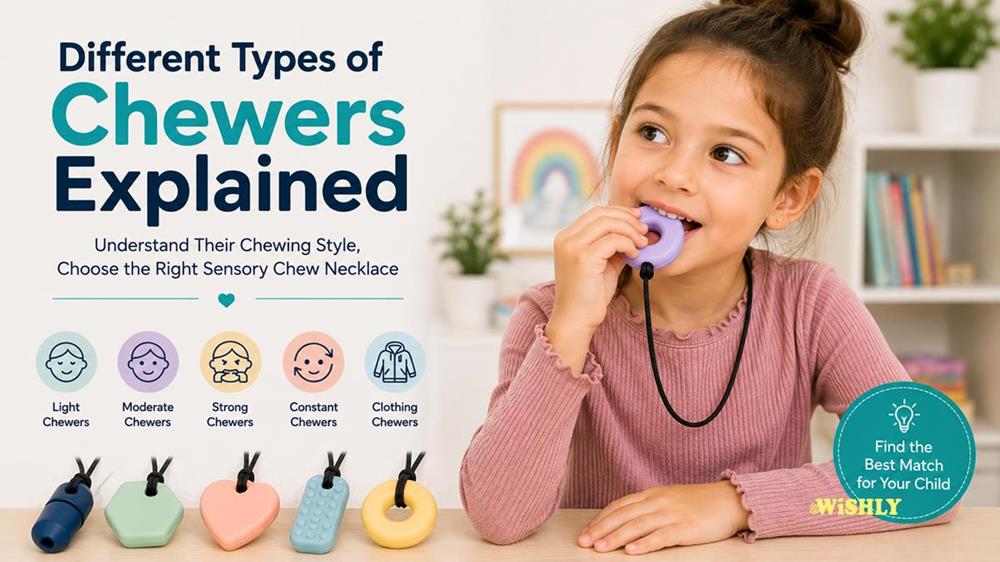
#Sensory Chew GuideLearn about the different types of chewers, from light and moderate to strong and constant chewers. Discover how chewing habits can help you choose the right sensory chew necklace, including the best firmness, shape and features for individual needs.
Every child chews differently. Some occasionally chew on their sleeves when they're concentrating, while others need strong, constant oral sensory input throughout the day. Understanding your child's chewing style can make choosing the right sensory chew necklace much easier.
In this guide, we'll explain the most common types of chewers, how to recognise them, and which features to look for when selecting a sensory chew necklace.
Related Guide: Choosing the Right Sensory Chew Necklace
Table of Contents
1. Why Do Children Chew Differently?
2. Light Chewers
3. Moderate Chewers
4. Strong Chewers
5. Constant Chewers
6. Clothing Chewers
7. Quick Guide
8. Find the Right Sensory Chew Necklace
9. Frequently Asked Questions
1. Why Do Children Chew Differently?
Children chew for many reasons, including self-regulation, focus, anxiety relief, or to satisfy oral sensory needs. Every child is unique, which means there isn't a one-size-fits-all chew necklace. Choosing the right firmness and shape starts with understanding how your child chews. Related Guide: Sensory Chew Necklace Firmness Guide2. Light Chewers
Common Signs
- Occasionally chews sleeves or collars
- Bites pencils from time to time
- Doesn't leave deep bite marks
- Mostly chews while concentrating
Recommended Choice
Light chewers usually prefer:- Soft firmness
- Round or oval shapes
- Smooth surfaces
3. Moderate Chewers
Common Signs
- Chews throughout the day
- Frequently bites clothing
- Leaves visible bite marks
- Uses chewing to stay calm
Recommended Choice
Medium firmness is often a good balance between comfort and durability. Popular shapes include:- Hexagon
- Dog tag
- Oval
4. Strong Chewers
Common Signs
- Chews very firmly
- Damages pencils or toys quickly
- Leaves deep bite marks
- Has broken chew necklaces before
Recommended Choice
Strong chewers usually benefit from:- Firm firmness
- Thicker designs
- Durable silicone
5. Constant Chewers
Some children don't necessarily chew harder—they simply chew much more often. They may chew:- During homework
- While watching TV
- In the car
- During transitions
- Throughout the school day
Recommended Choice
Look for necklaces that are:- Comfortable for extended use
- Durable enough for daily chewing
- Easy to clean
6. Clothing Chewers
If your child constantly chews:- Shirt collars
- Sleeves
- Hoodie strings
- Jacket zippers
7. Quick Guide
| Chewing Style | Recommended Firmness | Best For |
|---|---|---|
| Light Chewers | Soft | Occasional chewing and gentle oral sensory input. |
| Moderate Chewers | Medium | Everyday chewing with a balance of comfort and durability. |
| Strong Chewers | Firm | Heavy chewing and maximum durability. |
| Constant Chewers | Medium or Firm | Frequent chewing throughout the day. |
| Clothing Chewers | Depends on chewing strength | Redirecting chewing away from clothing. |
8. Find the Right Sensory Chew Necklace
Whether your child is a light, moderate, strong or constant chewer, choosing a sensory chew necklace that matches their chewing style can provide a more comfortable and durable chewing experience. Browse our collection of quality food-grade silicone sensory chew necklaces, available in a variety of shapes, textures and firmness levels to suit different oral sensory needs. Browse Our Chew Necklaces9. Frequently Asked Questions
Can a child be more than one type of chewer?
Yes. Many children chew differently depending on their environment, emotions, or activities.
Does stronger chewing always mean a firmer necklace?
Usually, but comfort and shape also play an important role.
Can chewing habits change?
Yes. As children grow or their sensory needs change, they may prefer a different firmness or shape.