When Should You Replace a Sensory Chew Necklace
#Sensory Chew GuideLearn when to replace a sensory chew necklace, common signs of wear and damage to look for, how chewing habits affect lifespan, and practical tips to keep your chew necklace safe and in good condition.
Sensory chew necklaces are designed for repeated everyday use, but like any product that is chewed regularly, they won't last forever. Over time, normal wear can affect both the silicone pendant and other components, such as the cord or breakaway clasp.
Knowing when to replace a sensory chew necklace is an important part of maintaining safe and effective use. Regular inspections can help you identify signs of wear before they become a problem.
In this guide, we'll explain what to look for, what affects a chew necklace's lifespan, and when it's time to replace it.
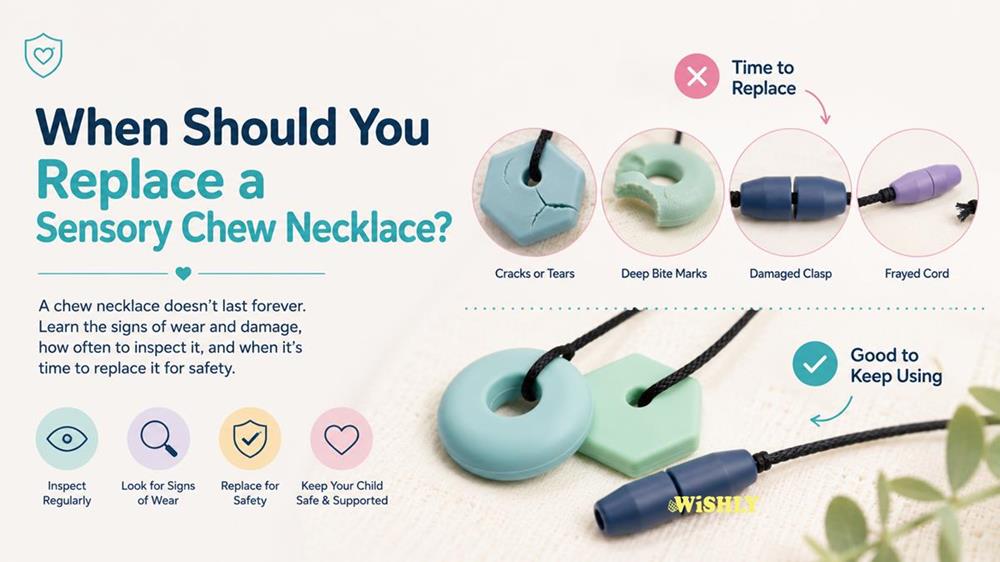
Table of Contents
1. Do Sensory Chew Necklaces Last Forever?
2. Signs It's Time to Replace a Sensory Chew Necklace
3. What Affects How Long a Chew Necklace Lasts?
4. How Often Should You Inspect a Chew Necklace?
5. Can You Repair a Damaged Chew Necklace?
6. How to Help Your Chew Necklace Last Longer
7. Find the Right Sensory Chew Necklace
8. Frequently Asked Questions
1. Do Sensory Chew Necklaces Last Forever?
No. Even high-quality sensory chew necklaces made from durable food-grade silicone will gradually wear with repeated use. How long a chew necklace lasts depends on several factors, including:- How often it's used
- How firmly it's chewed
- The necklace's firmness level
- The shape and thickness of the pendant
- How well it's cleaned and cared for
2. Signs It's Time to Replace a Sensory Chew Necklace
The clearest indication that a chew necklace should be replaced is visible damage. Here are the most common signs to look for.Cracks or Tears
Small surface cracks can develop over time with repeated chewing. If you notice:- Cracks
- Splits
- Tears
- Pieces beginning to separate
Deep Bite Marks
Light tooth marks are often part of normal use. However, if bite marks become deep enough to change the shape of the pendant or weaken the material, it's time for a replacement.Damaged Breakaway Clasp
The breakaway clasp should reconnect securely after separating. Replace the necklace if the clasp:- No longer reconnects properly
- Feels loose
- Is cracked
- Shows signs of damage
Frayed or Damaged Cord
Check the cord for:- Fraying
- Loose fibres
- Stretching
- Damage where it connects to the pendant or clasp
Loose Pendant
The pendant should remain securely attached to the cord. If it becomes loose or moves unexpectedly because of wear, discontinue use and replace the necklace.3. What Affects How Long a Chew Necklace Lasts?
Several factors influence the lifespan of a chew necklace.Chewing Habits
A person who chews gently may use the same necklace for much longer than someone who applies heavy bite pressure.Frequency of Use
A necklace worn and chewed every day will generally wear faster than one that's used occasionally.Firmness
Different firmness levels may wear differently depending on the user's chewing habits. For example:- Softer necklaces may show wear more quickly when used by strong chewers.
- Firmer necklaces may offer greater durability for some users.
Shape and Design
Pendant thickness, shape and overall design can also influence how pressure is distributed during chewing. Some designs naturally experience more wear in specific areas. Related Guide: Sensory Chew Necklace Shape GuideCare and Maintenance
Regular cleaning and proper storage can help keep a chew necklace in good condition. Related Guide: Cleaning and Caring for Sensory Chew Necklaces4. How Often Should You Inspect a Chew Necklace?
It's a good habit to inspect the necklace:- Before each use
- During regular cleaning
- After heavy chewing sessions
- If the necklace has been accidentally damaged
5. Can You Repair a Damaged Chew Necklace?
In general, no. If a chew necklace becomes damaged, it should be replaced rather than repaired. Avoid:- Gluing cracks
- Taping damaged areas
- Tying broken cords together
- Modifying the breakaway clasp
6. How to Help Your Chew Necklace Last Longer
While replacement is inevitable over time, good care habits can maximise the necklace's lifespan. Simple tips include:- Clean it regularly.
- Store it in a clean, dry place.
- Inspect it before use.
- Choose the appropriate firmness for the user's chewing habits.
- Avoid using it for anything other than chewing.
7. Find the Right Sensory Chew Necklace
Choosing the right sensory chew necklace is a personal decision that depends on factors such as chewing strength, preferred shape, texture, and everyday lifestyle. Taking the time to understand these differences can help you select a chew necklace that is both comfortable and suitable for your individual needs. If you're ready to explore your options, browse our collection of sensory chew necklaces featuring a variety of shapes, colours, textures, and firmness levels. Whether you're looking for a discreet everyday pendant or a more durable option for stronger chewers, you'll find designs to suit a wide range of ages and preferences. Browse Our Chew Necklaces8. Frequently Asked Questions
How long does a sensory chew necklace last?
There is no fixed lifespan. It depends on the user's chewing habits, how often the necklace is used, the firmness level and how well it is cared for.
Can I keep using a chew necklace with bite marks?
Light surface bite marks are common. However, if the bite marks are deep enough to weaken or change the shape of the pendant, it should be replaced.
Should I replace the necklace if the clasp breaks?
Yes. If the breakaway clasp is damaged or no longer reconnects securely, replace the necklace.
Can I repair a cracked chew necklace?
No. Damaged chew necklaces should be replaced rather than repaired.
Does a softer chew necklace wear out faster?
It can, particularly if it is used by someone who chews with greater force. Choosing the appropriate firmness can help improve durability.
Does regular cleaning make a necklace last longer?
Cleaning helps keep the necklace hygienic and makes it easier to inspect for damage, but it doesn't prevent normal wear from repeated chewing.