Sensory Chew Necklace Shape Guide
#Sensory Chew GuideDiscover the different sensory chew necklace shapes and how they affect comfort, chewing style, and oral sensory input. Compare popular designs, textures, and features to help choose the most suitable chew necklace for individual preferences.
Sensory chew necklaces come in many different shapes, from simple dog tags and chew sticks to crystals, puzzle pieces, feathers and geometric pendants. While they may all serve the same general purpose, the shape of a chew necklace can influence how it feels to hold, bite and chew.
Some people prefer larger chewing surfaces, while others look for slimmer, more discreet designs that resemble everyday jewellery. Personal comfort, chewing habits and style preferences all play a role in finding the right shape.
In this guide, we'll explore the most common sensory chew necklace shapes, how they differ, and what to consider when choosing one.
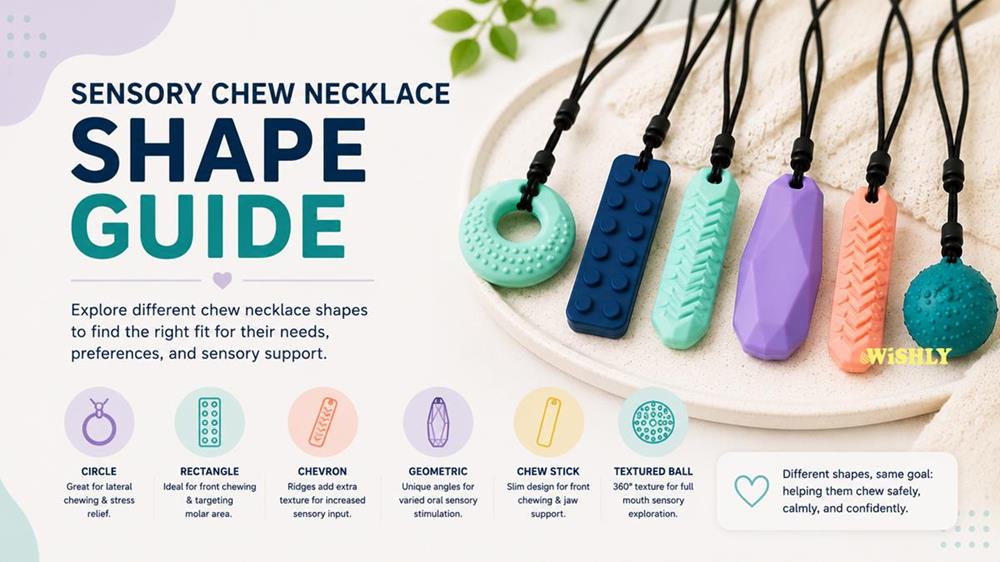
Table of Contents
1. Why Does Shape Matter?
2. Common Sensory Chew Necklace Shapes
3. How Shape Affects the Chewing Experience
4. Does Shape Affect Firmness?
5. Does Age Determine the Best Shape?
6. How to Choose the Right Shape
7. Find the Right Sensory Chew Necklace
8. Frequently Asked Questions
1. Why Does Shape Matter?
The shape of a chew necklace affects more than its appearance. Different designs can influence:- The size of the chewing surface
- How easy the pendant is to hold
- Which parts of the pendant are commonly chewed
- How discreet the necklace looks when worn
- The overall chewing experience
2. Common Sensory Chew Necklace Shapes
Dog Tag
Dog tag pendants are among the most popular and versatile designs. Features- Flat rectangular shape
- Smooth edges
- Large chewing surface
- Simple, discreet appearance
- Children
- Teenagers
- Adults
- First-time users
Chew Stick
Chew sticks are long, narrow pendants designed for users who prefer chewing with the back teeth. Features- Slim profile
- Longer shape
- Easy to grip
- Can reach different areas of the mouth
- Moderate to strong chewers
- People who prefer focused chewing
Crystal Pendant
Crystal-inspired designs combine function with a jewellery-like appearance. Features- Faceted surfaces
- Decorative appearance
- Slim profile
- Popular with older children, teens and adults
Feather Shape
Feather pendants offer a balance between decorative styling and practical chewing surfaces. Features- Slightly curved profile
- Textured feather details
- Lightweight feel
- Stylish appearance
Puzzle Piece
Puzzle-piece pendants have a distinctive silhouette with rounded edges. Features- Easy to grip
- Multiple chewing points
- Comfortable rounded design
Shark Tooth
Shark tooth pendants are often thicker near the base and taper toward the tip. Features- Bold design
- Tapered chewing surfaces
- Modern appearance
Heart
Heart-shaped pendants combine a familiar design with generous chewing surfaces. Features- Rounded edges
- Symmetrical shape
- Comfortable to hold
Geometric Shapes
Modern geometric designs include circles, hexagons, triangles and abstract forms. Features- Contemporary appearance
- Simple styling
- Often suitable for teenagers and adults
3. How Shape Affects the Chewing Experience
Different shapes provide different chewing experiences. For example:Larger Shapes
Often provide:- More chewing area
- Multiple biting positions
- Greater flexibility when chewing
Slim Shapes
Often provide:- More discreet appearance
- Easier everyday wear
- Smaller chewing surface
Textured Shapes
Can provide:- Extra tactile feedback
- More sensory variety
- Additional grip
Smooth Shapes
Often feel:- Simpler
- Easier to clean
- Comfortable for users who prefer minimal texture
4. Does Shape Affect Firmness?
Not exactly. Shape and firmness are two separate features. However, some shapes naturally feel different because of their:- Thickness
- Width
- Overall design
5. Does Age Determine the Best Shape?
Not necessarily. While some designs are marketed toward certain age groups, personal preference is often more important. For example:- Young children may enjoy colourful, playful shapes.
- Teenagers may prefer geometric or crystal pendants.
- Adults often choose minimalist styles that resemble ordinary jewellery.
6. How to Choose the Right Shape
When comparing different shapes, ask yourself:- Which design feels most comfortable?
- Would a larger chewing surface be helpful?
- Is a discreet appearance important?
- Do you prefer smooth or textured surfaces?
- Will the necklace be worn at school, work or home?
7. Find the Right Sensory Chew Necklace
Choosing the right sensory chew necklace is a personal decision that depends on factors such as chewing strength, preferred shape, texture, and everyday lifestyle. Taking the time to understand these differences can help you select a chew necklace that is both comfortable and suitable for your individual needs. If you're ready to explore your options, browse our collection of sensory chew necklaces featuring a variety of shapes, colours, textures, and firmness levels. Whether you're looking for a discreet everyday pendant or a more durable option for stronger chewers, you'll find designs to suit a wide range of ages and preferences. Browse Our Chew Necklaces8. Frequently Asked Questions
Which sensory chew necklace shape is best?
There isn't one best shape. The right choice depends on the user's chewing habits, comfort preferences and style.
Are larger chew necklaces better?
Not necessarily. Larger pendants provide more chewing area, while smaller designs are often more discreet.
Does shape affect durability?
Shape can influence how pressure is distributed during chewing, but durability also depends on the material, thickness and firmness.
Is a chew stick better than a dog tag?
Neither is inherently better. A chew stick offers a narrow chewing surface, while a dog tag provides a broader, flatter area.
Should I choose a smooth or textured shape?
This depends on personal preference. Some people enjoy additional tactile feedback, while others prefer a smooth finish.
Does shape affect firmness?
No. Firmness is determined by the material and design, although thicker shapes may feel more resistant.
Can adults wear shaped chew necklaces?
Yes. Many designs, such as crystal and geometric pendants, are intentionally created to resemble everyday jewellery.