Understanding Sensory Chew Necklace Materials
#Sensory Chew GuideLearn about the materials used in sensory chew necklaces, including food-grade silicone, BPA-free, PVC-free and phthalate-free materials. Discover why material quality matters for comfort, durability, cleaning and everyday use.
The material of a sensory chew necklace plays an important role in its comfort, durability, and everyday use. While most quality chew necklaces are made from food-grade silicone, you may also come across terms such as BPA-free, PVC-free and phthalate-free when comparing products.
If you're new to sensory chew necklaces, these labels can be confusing. What do they actually mean, and why are they important?
In this guide, we'll explain the materials commonly used in sensory chew necklaces, what to look for when choosing one, and how material quality can affect your overall experience.
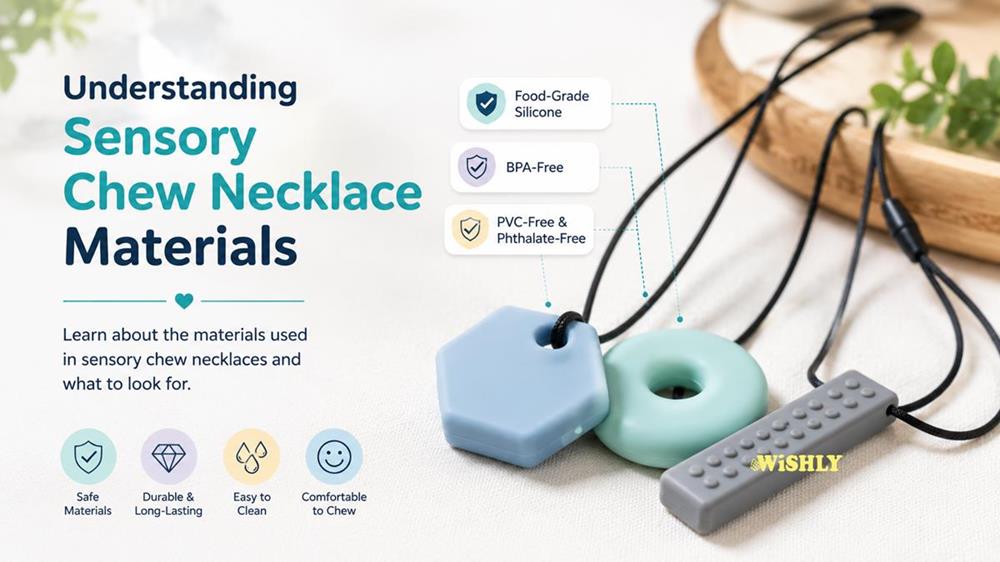
Table of Contents
1. Why the Material Matters?
2. What Are Most Sensory Chew Necklaces Made From?
3. What Does "Food-Grade Silicone" Mean?
4. Understanding Common Material Labels
5. Why Silicone Is Popular for Sensory Chew Necklaces?
6. Does the Material Affect Firmness?
7. Does the Material Affect Durability?
8. How to Identify a Quality Sensory Chew Necklace?
9. Caring for Silicone Chew Necklaces
10. Find the Right Sensory Chew Necklace
11. Frequently Asked Questions
1. Why the Material Matters?
A sensory chew necklace is designed to be chewed repeatedly, so the material needs to be durable, flexible and easy to clean. Choosing a quality material can influence:- Comfort during chewing
- Resistance to wear
- Ease of cleaning
- Everyday durability
- Overall product quality
2. What Are Most Sensory Chew Necklaces Made From?
Most modern sensory chew necklaces are made from food-grade silicone. Silicone is a flexible, rubber-like material that is widely used in products intended for regular contact with food and in many everyday household and baby products. Manufacturers often choose silicone because it is:- Flexible
- Durable
- Comfortable to chew
- Easy to clean
- Available in different firmness levels
- Resistant to everyday moisture
3. What Does "Food-Grade Silicone" Mean?
Food-grade silicone refers to silicone that is manufactured for contact with food and intended to meet relevant safety requirements in the markets where it is sold. For consumers, this generally means the material is designed for regular food contact when used as intended by the manufacturer. When shopping for a sensory chew necklace, look for products that clearly state they are made from food-grade silicone and provide transparent product information.4. Understanding Common Material Labels
You may notice several material claims listed on product packaging or websites. Here's what they commonly mean.BPA-Free
BPA (Bisphenol A) is a chemical used in the production of some plastics. Many quality sensory chew necklaces are labelled BPA-free, meaning they are manufactured without BPA.PVC-Free
PVC (Polyvinyl Chloride) is a type of plastic used in many consumer products. Many silicone chew necklaces are also labelled PVC-free, indicating they do not contain this material.Phthalate-Free
Phthalates are chemicals that have been used to make some plastics more flexible. Many quality chew necklaces are manufactured without phthalates and may be labelled phthalate-free.Latex-Free
Some products also state that they are latex-free, which may be helpful for individuals with latex sensitivities. Always refer to the manufacturer's product information if this is an important consideration.5. Why Silicone Is Popular for Sensory Chew Necklaces?
Silicone offers several practical advantages.Flexible
It compresses slightly during chewing while returning to its original shape.Durable
Quality silicone is designed to withstand repeated everyday use, although no chew necklace lasts forever.Comfortable
Its slightly soft texture provides a comfortable chewing experience for many users.Easy to Clean
Silicone can usually be cleaned with warm water and mild soap according to the manufacturer's instructions.Available in Different Firmness Levels
Silicone can be manufactured in different firmness levels, allowing products to suit different chewing preferences. Related Guide: Sensory Chew Necklace Firmness Guide6. Does the Material Affect Firmness?
Not directly. Most chew necklaces are made from silicone, but firmness is determined by how the silicone is manufactured and designed, rather than simply the material itself. That's why two silicone chew necklaces can feel completely different. Factors that influence firmness include:- Silicone formulation
- Pendant thickness
- Shape
- Overall design
7. Does the Material Affect Durability?
Yes, but durability also depends on:- Chewing habits
- Frequency of use
- Pendant design
- Firmness
- Proper care
8. How to Identify a Quality Sensory Chew Necklace?
When comparing products, look for:- Food-grade silicone
- BPA-free materials
- PVC-free materials
- Phthalate-free materials
- Breakaway safety clasp
- Clear care instructions
- Manufacturer guidance
9. Caring for Silicone Chew Necklaces
Looking after the material helps maximise its lifespan. Good habits include:- Cleaning regularly
- Allowing the necklace to dry completely
- Inspecting it for signs of wear
- Replacing it if damaged
- Storing it in a clean, dry place
10. Find the Right Sensory Chew Necklace
Choosing the right sensory chew necklace is a personal decision that depends on factors such as chewing strength, preferred shape, texture, and everyday lifestyle. Taking the time to understand these differences can help you select a chew necklace that is both comfortable and suitable for your individual needs. If you're ready to explore your options, browse our collection of sensory chew necklaces featuring a variety of shapes, colours, textures, and firmness levels. Whether you're looking for a discreet everyday pendant or a more durable option for stronger chewers, you'll find designs to suit a wide range of ages and preferences. Browse Our Chew Necklaces11. Frequently Asked Questions
What material are sensory chew necklaces made from?
Most quality sensory chew necklaces are made from food-grade silicone because it is durable, flexible and easy to clean.
Is food-grade silicone different from ordinary silicone?
Food-grade silicone is manufactured for contact with food and intended to meet applicable standards in the markets where it is sold.
What does BPA-free mean?
It means the product is manufactured without Bisphenol A (BPA), a chemical used in some plastics.
Why do products mention PVC-free and phthalate-free?
These labels indicate that the product is manufactured without PVC or phthalates, which some consumers prefer to avoid.
Does silicone wear out?
Yes. Like any product used regularly, silicone will eventually show signs of wear and should be replaced if it becomes damaged.
Can all silicone chew necklaces be cleaned the same way?
Follow the manufacturer's care instructions. Most food-grade silicone chew necklaces can be cleaned with warm water and mild soap.
Does the material affect which firmness I should choose?
No. Firmness depends on the product's design and silicone formulation rather than the material name alone.