Sensory Chew Necklace Safety Guide
#Sensory Chew GuideLearn how to use a sensory chew necklace safely with tips on breakaway clasps, food-grade silicone, regular inspections, cleaning, supervision, and when to replace a worn chew necklace.
Sensory chew necklaces are designed to provide a safer alternative to chewing on clothing, pencils, fingernails, and other everyday objects. However, like any product that's used regularly, they should be used correctly and inspected often to help ensure they remain safe and suitable for everyday use.
Whether you're buying a chew necklace for a child, teenager, or adult, understanding basic safety practices can help maximise its lifespan while reducing unnecessary risks.
In this guide, we'll cover the key safety features to look for, how to inspect a chew necklace, when to replace it, and everyday tips for safe use.
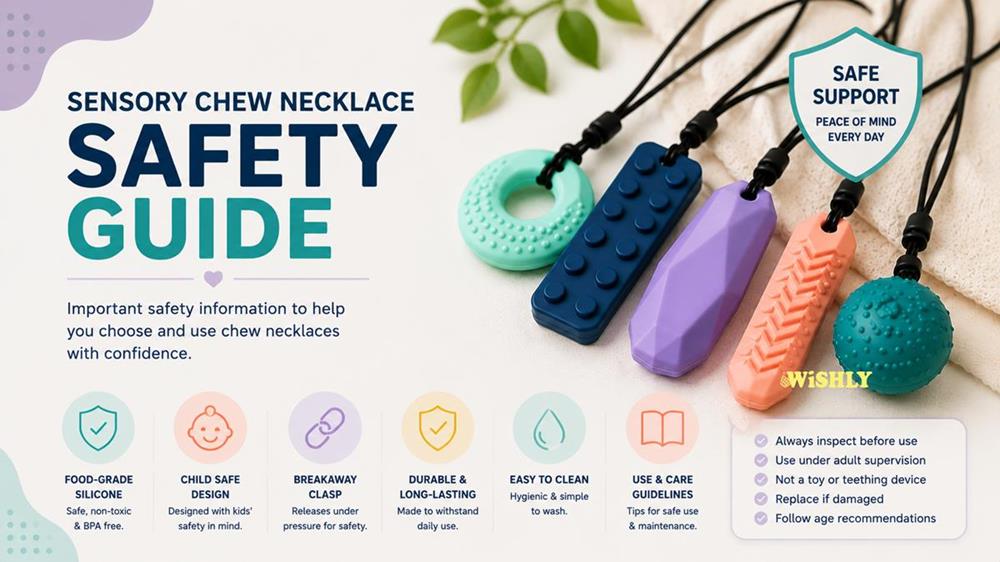
Table of Contents
1. Are Sensory Chew Necklaces Safe?
2. Choose a Quality Chew Necklace
3. Why Breakaway Clasps Matter
4. Inspect the Necklace Regularly
5. When Should You Replace a Chew Necklace?
6. Use the Necklace Only as Intended
7. Consider Age and Supervision
8. Keep It Clean
9. Store It Properly
10. Common Safety Mistakes to Avoid
11. Safety Checklist
12. Find the Right Sensory Chew Necklace
13. Frequently Asked Questions
1. Are Sensory Chew Necklaces Safe?
Quality sensory chew necklaces are designed specifically for oral sensory use and are generally made from durable, chew-safe materials such as food-grade silicone. However, safe use depends on several factors, including:- Choosing an appropriate product
- Using it as intended
- Inspecting it regularly
- Replacing it when damaged
- Following the manufacturer's recommendations
2. Choose a Quality Chew Necklace
Not all chew necklaces are manufactured to the same standards. When purchasing one, look for products that clearly state they are made from:- Food-grade silicone
- BPA-free materials
- PVC-free materials
- Phthalate-free materials
- Latex-free materials (where applicable)
3. Why Breakaway Clasps Matter
One of the most important safety features is the breakaway clasp. Unlike a traditional necklace clasp, a breakaway clasp is designed to release when significant force is applied to the cord. This helps reduce the risk of injury if the necklace becomes caught on playground equipment, furniture, or another object. Even though a breakaway clasp improves safety, users should still avoid pulling, swinging, or wrapping the necklace around objects or body parts.4. Inspect the Necklace Regularly
Before each use, take a few moments to inspect the necklace. Check for signs of:- Cracks
- Tears
- Splits
- Deep bite marks
- Excessive stretching
- Loose cords
- Damaged clasps
5. When Should You Replace a Chew Necklace?
Every chew necklace will eventually show signs of wear. Replacement is recommended if you notice:- Cracking
- Tearing
- Pieces separating
- Significant bite damage
- Loose or damaged breakaway clasp
- Changes in the silicone that affect its integrity
6. Use the Necklace Only as Intended
Sensory chew necklaces are designed for chewing. They should not be used for:- Swinging
- Tug-of-war
- Stretching
- Throwing
- Wrapping around fingers, wrists, or other body parts
7. Consider Age and Supervision
The level of supervision needed depends on the individual user's age and abilities. For younger children:- Introduce the necklace according to the manufacturer's recommendations.
- Supervise use when appropriate.
- Check the necklace regularly during the day.
8. Keep It Clean
Because chew necklaces are placed in the mouth, regular cleaning is an important part of safe use. General recommendations include:- Cleaning before first use
- Washing regularly
- Following the manufacturer's care instructions
- Allowing the necklace to dry completely before reuse
9. Store It Properly
When not being worn, store the chew necklace:- In a clean, dry place
- Away from direct sunlight
- Away from excessive heat
- Where it won't collect dirt or dust
10. Common Safety Mistakes to Avoid
Avoid these common mistakes:- Continuing to use a damaged necklace
- Ignoring bite marks or cracks
- Using products made from unknown materials
- Forgetting to inspect the clasp
- Using the necklace for purposes other than chewing
- Failing to clean it regularly
11. Safety Checklist
Before use, quickly check:- Pendant is free from cracks or tears.
- Breakaway clasp works correctly.
- Cord is secure.
- Necklace is clean.
- Product is appropriate for the intended user.
12. Find the Right Sensory Chew Necklace
Choosing the right sensory chew necklace is a personal decision that depends on factors such as chewing strength, preferred shape, texture, and everyday lifestyle. Taking the time to understand these differences can help you select a chew necklace that is both comfortable and suitable for your individual needs. If you're ready to explore your options, browse our collection of sensory chew necklaces featuring a variety of shapes, colours, textures, and firmness levels. Whether you're looking for a discreet everyday pendant or a more durable option for stronger chewers, you'll find designs to suit a wide range of ages and preferences. Browse Our Chew Necklaces13. Frequently Asked Questions
Are sensory chew necklaces safe?
Quality chew necklaces are designed specifically for chewing when used according to the manufacturer's instructions. Regular inspection and proper care are essential.
What is a breakaway clasp?
A breakaway clasp is designed to separate under significant pressure, helping reduce the risk of injury if the necklace becomes caught.
How often should I inspect a chew necklace?
It's a good idea to inspect the necklace before each use and check it regularly for signs of wear.
When should I replace a chew necklace?
Replace it whenever you notice cracks, tears, significant bite damage, or a damaged clasp.
Can a damaged chew necklace still be used?
No. If the necklace shows signs of damage, discontinue use and replace it.
Do adults need breakaway clasps?
Yes. Breakaway clasps are an important safety feature regardless of the user's age.
Should chew necklaces be cleaned regularly?
Yes. Regular cleaning helps maintain hygiene and keeps the necklace in good condition.